Tuesday, April 27, 2010

Robert Collison, RIP. And the Deficit Commission Comes to Life.


Back in December, Serious Medicine Strategy took admiring note of an extraordinary medical operation that took place in New York City earlier that month. A team of surgeons led by Dr. Jean Emonds andDr. Tamoaki Kato performed a 43-hour ex vivo operation on Robert Collison, a Wisconsin man suffering from advanced and rampant cancer. In the ex vivo procedure, Collison's organs were removed, the cancer cut away, and then the organs were put back into Collison's body.

Now, sadly, five months later, Collison has died, as reported by The New York Times' Denise Grady, who has been following this case closely.

For his part, Dr. Emond, one of the team leaders at NewYork-Presbyterian/Columbia University Medical Center, said that the procedure would continue:

Dr. Emond said he expected the team in New York to continue performing ex vivo operations, even though health care “bean counters will be appalled at our profligate ways.” New York-Presbyterian/Columbia is a teaching and research hospital, he said, and part of its mission is to be innovative.

He said ex vivo surgery was still in its early days, and the team hoped to improve it to help patients like Mr. Collison.

“We’re not the kind of people who would stop,” Dr. Emond said.


And the truth, of course, is that everything is expensive and difficult at first. It only gets easier, and better, and cheaper, with practice.

But here's a prediction, the "bean counters" that Dr. Emond warns about will descend on this case, citing the expense--nearly $300,000, according to the Times--as an instance to be made into an example. This case could become a rallying cry for deficit cutters. Unfortunately, those deficit cutters don't see that a) such medical heroism is popular, and b) such medical heroism is also the beginning of a new industry.

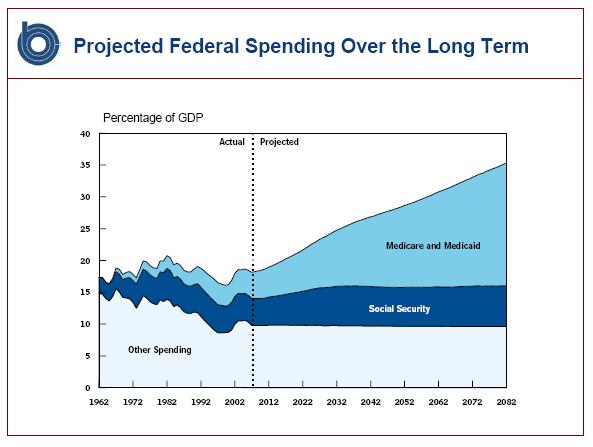
As it happens, Tuesday. April 27 is also the day that the deficit commission holds its first formal meeting in Washington. There will be much talk about Medicare spending as the biggest driver of entitlement spending, which, of course, it is. And there will be much talk about restraining the growth of Medicare. But there will be little practical effect, because all the approaches being talked about--deep cuts, in some form or fashion--are deeply unpopular. One of the deficit commission co-chairs, former Sen. Alan Simpson, calls it a "suicide mission." In so saying, Simpson helps to cement his reputation for both candor and courage, but we might note that what's really needed is vision and effectiveness. That is, in the long run it doesn't do much good to simply describe a problem--what matters is fixing the problem.

What might be popular is a larger look at Medicare spending, in which ways to make people healthier are explored. Good health is cheaper than bad health. To cite an obvious example, vaccines are cheaper than the disease, outpatient procedures are cheaper than inpatient procedures, and pills are ultimately cheaper than just about anything else. But getting to the point where life-saving and life-enhancing procedures are possible is a great challenge. As with good writing, it takes a lot of work to make it look easy.

And there's even a place for ex vivo surgery in that future Medicare plan. Because while ex vivo might seem expensive, there are plenty of people who would happily pay the $300,000 for the operation--or a lot more than that. And over time, not only would lives be saved, but a new economic engine for New York City and other medical hubs would develop.

Sunday, April 25, 2010

"Faltering Cancer Trials" -- A Challenge to the Obama Administration


The New York Times publishes a tough editorial this morning, under the headline, "Faltering Cancer Trials," concerning the sorry state of the National Cancer Institute--and casting further light on the Obama administration's efforts in the healthcare field.

In a nutshell, it seems as through the Obamans have been so focused on expanding the size of government that they have lost sight of the effectiveness of government. A big but incompetent government is what Americans have come to expect, but they don't like it. And they certainly don't want more of it. As the Times puts it:

The nation’s most important system for judging the clinical effectiveness of cancer treatments is approaching “a state of crisis.” That is the disturbing verdict of experts assembled by the National Academy of Sciences to review the performance of clinical trials sponsored by the National Cancer Institute.

"A state of crisis." Hmm. For a disease, cancer, which is the second-leading cause of death in the US">claiming more than half a million lives every year. And a cost of more than $100 billion a year in direct outlays, to say nothing of indirect costs, including lost work and productivity.

And yet, as the Times details, the National Cancer Institute seems to be in chaos:

The most shocking deficiency highlighted by the report, issued by the academy’s Institute of Medicine, is that about 40 percent of all advanced clinical trials sponsored by the Cancer Institute are never completed. That is an incredible waste of effort and money, and a huge obstacle at a time when researchers are developing promising new therapies that must be rigorously tested.

These large, government-sponsored studies are supposed to be the gold standard — and very different from the narrow, occasionally biased studies sponsored by manufacturers seeking approval of a new drug.

The government-sponsored trials can be invaluable in comparing one therapy against another (manufacturers rarely want to put their products up against a competitor’s), combinations of therapies, or therapies for rare diseases with little commercial potential.

So it is especially worrying to hear the experts say that the system — run by the Cancer Institute at the National Institutes of Health — is so mired in cumbersome procedures that it needs to be completely overhauled.

The Cancer Institute funds clinical trials primarily through 10 “cooperative groups” of experts. They generate ideas for testing new therapies and conduct the trials through networks of cancer centers and community oncology practices. More than 25,000 patients, 3,100 institutions and 14,000 investigators participate each year.

Yet a series of reviews in recent years found that the testing operation is mired in bureaucracy and poorly coordinated. A typical trial must navigate past dozens of overlapping reviews by different boards and agencies that must approve the original concept for the trial and then the protocol that will govern how it is conducted before the investigators can start enrolling any patients.

The average time between developing the concept for a study and getting it started is about 2.5 years. The longer a study takes to get started, the more likely it is to become scientifically out of date, and the less likely it is that doctors or patients will want to participate.

Other factors, including failure to pay investigators and their institutions the full costs of a trial, can also impede enrollment. And if not enough patients are enrolled, the study lacks the statistical power to generate meaningful results and cannot be completed.

The Institute of Medicine panel, headed by John Mendelsohn, president of the M.D. Anderson Cancer Center in Houston, offered a range of suggestions for improving the prospects for success.

It called for reducing and consolidating the number of cooperative groups, committees and reviews; increasing the money to support the trials; increasing the academic rewards to encourage researchers to run clinical trials; setting strict deadlines for each step in the process; and prioritizing the studies most likely to be successful. All that should be done even if money has to be transferred from other research activities.

The need for improvement looms especially large now that the Obama administration is pouring substantial sums into “comparative effectiveness research.” That is essential to helping doctors determine which treatments work well and which do not — and holding down the cost of medical care.


Yes, it will be interesting to see what the Obama administration proposes to do about this issue. Speeches and rhetoric will not do.

So will the President call a top-level meeting to consider management reforms at the National Cancer Institute? Will he take time away from his other pending priorities, such as financial reform, "cap and trade," and "comprehensive" immigration reform to focus on improving the administration of vital health programs? Or will he be content to let the same bureaucracy that allowed the problem to get worse to work on it--read: worsen it--further?

It is also interesting that this cancer crisis seems to have grown worse during the year that the Obama administration fought so diligently to give the government still more power over healthcare. But a focus on "quantity"--that is, the size of government--seems to be a different thing than a focus on "quality"--the effectiveness of government. But perhaps the Obama administration does not agree.

Friday, April 23, 2010

Polio Makes a Comeback


Robert A. Guth, writing in The Wall Street Journal, reminds us that the ultimate issue in health is combating the diseases that jeopardize our health. So if, as Guth reports, polio is making a grim comeback, mostly in Africa, then the imperative is to keep polio from making that comeback. Financing of health insurance is secondary to financing of cures.

The Gates Foundation--that's Bill Gates, pictured above--has spent $700 million trying to eradicate polio from Africa, but the disease recently popped up in Tajikistan, and is still present in many countries around the world. For most Americans, fortunately, polio is a distant memory--or no memory at all. Thanks to the efforts of Dr. Jonas Salk and many others, a polio vaccine was introduced in 1955.

But the news from Africa and elsewhere is a grim reminder: The struggle against all the great epidemiological killers of the past is never truly over. As the Journal's Guth records, there's an ongoing policy debate between "vertical" and "horizontal" approaches to health. The "vertical" approach focuses on the disease, while the "horizontal" approach focuses on social conditions, including fighting illiteracy and poverty. It's possible to make a strong argument for both approaches, of course, and the Gates Foundation appears to be embracing both approaches.

But if polio, the virus, returns to America, Americans will quickly be reminded of the wisdom of the polio-fighters of decades past. Salk & Co. didn't fight poverty, they fought polio. And they succeeded against polio. In the scheme of things, their victory was relatively quick and decisive. By contrast, the fight against poverty has been, shall we say, a lot more complicated.

Yet today we can assert that those threatened by polio are more needful of ex ante vaccines, than they are needeful of ex post facto financing of their care--their wheelchairs, their iron lungs.

We don't want to go back to those bad old days.

"Health Overhaul To Increase Nation's Tab"


"Health Overhaul To Increase Nation's Tab" --that's the headline from the Associated Press' Ricardo Alonso-Zaldivar detailing a study from the Department of Health and Human Services that shows that Obamacare will raise costs while hurting Medicare. How could a program do both--raise costs and cut services? Simple: The bill adds as many as 34 new million people to the rolls, while transferring money from existing Medicare programs. Here's an excerpt of the AP story:

The analysis also found that the law falls short of the president's twin goal of controlling runaway costs, raising projected spending by about 1 percent over 10 years. That increase could get bigger, however, since the report also warned that Medicare cuts in the law may be unrealistic and unsustainable, forcing lawmakers to roll them back.

The mixed verdict for Obama's signature issue is the first comprehensive look by neutral experts.

In particular, the warnings about Medicare could become a major political liability for Democratic lawmakers in the midterm elections. The report projected that Medicare cuts could drive about 15 percent of hospitals and other institutional providers into the red, "possibly jeopardizing access" to care for seniors.


The Obama administration, of course, sought to distance these findings by their own HHS staffers, but just as obviously, the talk about controlling costs--however sincere it might have been from some Obamacare advocates--was ultimately a sucker's game.

But as with Charlie Brown and the football, some folks never seem to figure out that they are getting snookered.

Wednesday, April 21, 2010

Prosecutions Are Not A Strategy For Improving Health and Medicine


The New York Times’ Barry Meier raises many interesting--and disturbing--questions about the future of medical liability. That is to say, Meier, without saying it, Meier takes up the issue of medical progress, and whether or not we will have medical progress. The unspoken issue: While we should all oppose corporate malfeasance, we should also be fearful of the medical stasis that might result from a paralyzing of the system by which medical progress is made. To put it bluntly, medical stasis means that we die before our time. Medical stasis is a greater threat than corporate malfeasance.

The headline for the Times story reads, “When Heart Devices Fail, Who Should Be Blamed?” Focusing on a case in which the Guidant Corporation sold defective heart defibrillators, leading to at least six deaths, Meier details a debate in legal and governmental circles: Are fines--to say nothing of liability lawsuits, which can run into the billions--a sufficient punishment or deterrent for bad corporate behavior, or should authorities pursue criminal prosecutions as well?

In recent years, Meier notes, the Justice Department has imposed heavy fines on drug and device makers, and yet corporate executives have only rarely faced criminal charges. Yet this situation might change: “Officials of the Food and Drug Administration say that the Obama administration intends to push for more prosecutions of corporate officials, a move that is likely to please patient advocates but also to touch off intense debate.” In other words, criminal charges--and perhaps prison sentences--might in store.

Yet debates over civil vs. criminal liability aren't just legal and governmental issues. They are also medical issues. The legal and the governmental are connected to the medical. So those tinkering with the legal and the governmental need to be mindful of the medical, because the medical affects all of us.

Meanwhile, as the Times notes, Boston Scientific, which now owns Guidant, is looking at a $296 million fine, unless, of course, in the glare of publicity, such as this Times story, the legal rememdy is made harsher toward the company, and the Justice Department escalates to criminal charges.

But we might ask: Where's that $296 million going to go? The answer, of course, is that in federal cases, the money goes into the Treasury general fund. So what we are seeing, then, is the transfer of $296 million out of capital available for healthcare, over to the national fisc. That might be good news for bailout recipients, or other federal dependents; it might even be good news for budget balancers, those eternal optimists. But it is not good news for healthcare. Because not only is that $296 million gone out of the pocket of Boston Scientific, but the general signal has been sent--there are easier ways to make money than medical equipment. Allocation of risk-capital is always a pivotal issue in any industry. However, for obvious reasons, there’s a greater public interest in the allocation of capital to healthcare than to most other sectors.

And so, mindful of the year-long debate over Obamacare, we might pause to ask: Is it possible that the Obama administration is seeking to shrink the healthcare sector in the name of “bending the cost curve”? That is, by pushing capital out of the healthcare sector, is it trying to lower the share of our economy dedicated to healthcare? If the federal government says that spending 17 percent of GDP on healthcare is too much, then the reductions must start somewhere--and every $296 million helps.

So the average American, too, is a stakeholder in the discussion of medical priorities--or should be. After all, heart disease is the leading cause of death in the United States; nearly half a million Americans die every year.

The average American might therefore be justified in intervening in this legal-governmental debate, to ask a purely medical question: What's the best way, amidst this legal and political wrangling, to advance the science of medicine? More to the point, what’s the best way to advance the cause of helping people to live longer and better in the face of heart disease?

If the Obama administration decides to target medical executives for criminal prosecution, does that make it more likely, or less likely, that medical companies will stay in the field, to say nothing of going into the field? If, as they say, that things you tax you get less of--and what's the corollary for things you seek to imprison? Or does the Obama administration have some other plan for improving healthcare--that none of us know about?

Here at Serious Medicine Strategy, we hold no brief for Boston Scientific.

But lack of financial interest is not the same as policy disinterest. We are intensely interested in the process by which defibrillators and other devices are made, improved, and then further improved. And we feel the same way about drugs and other kinds of treatments.

We wonder, therefore, if we have lost sight of the real goal here, which is to make Americans healthier. If Americans are made healthier by piling on civil and criminal liabilities--chasing bad actors out of the system--then that's one thing. But if not, if we are simply shrinking the healthcare sector as punishment for bad decisions--that’s a much different thing. If Obama administration prosecutions are the beginning of something better, great. But if they are an end in themselves, then it’s not so clear that we, and our health, are better off.

Perhaps we should step back and take another look at how this system works. Right now, we have the equivalent of a machine for churning out legal and political judgments, not medical-scientific advances. We know how to make trial lawyers rich, and we know how to build big bureaucracies. But do we know how to move medical science forward?

What's the best strategic approach to advancing medical devices, and making them better? Maybe Boston Scientific is a part of the solution, maybe it isn't. But if Boston Scientific is not part of the solution, let's figure out, quick, what should be part of the solution. Let's not crush one company in the medical equipment space--and send a potentially scary signal to others in that space--and think that we have made any progress toward improving our prospects against heart disease. If not Boston Scientific, then who?

To answer these questions in a systematic way, we need a strategy--a Serious Medicine Strategy. Trial-lawyerism is not a strategy for improving healthcare. Neither is Naderism. Nor revenge. Even justice, desirable as that might be for other reasons, is not a strategy for improving healthcare. If somebody at Boston Scientific goes to jail, that jailing will not cure a single diseased heart.

What will cure a diseased heart is medical research. And medical research must be encouraged, not frightened away. If people need to go to jail, then they need to go to jail. But let’s not call that a healthcare policy. It’s no kind of strategy for improving the health of Americans.

Tuesday, April 20, 2010

Was Obamacare An Exercise in Vindicating Big Government? If So...


Interesting catch by David Paul Kuhn, writing in RealClearPolitics.com.

The PBS documentary "Obama's Deal" has a revealing moment. White House communications director Dan Pfeiffer is discussing how the president decided to focus on healthcare.

Pfeiffer: We were sitting in the Oval Office, and we were sort of having a debate around health care at one point, and the president said, "It's about health care, but it's not really about health care. It's also about proving whether we can still solve big problems in this country." And this was going to be the test case for that.


An interesting quote to dwell on, from Barack Obama: "It's about health care, but it's not really about health care. It's also about proving whether we can still solve big problems in this country." Kuhn's point is that Obama & Co. badly misread the temper of the times. Maybe that's why Republicans seem destined to win back the House, at minimum.

Friday, April 16, 2010

How long a wait for healthcare in the UK? How long a wait in the US in the years ahead?


Tom Shales, TV critic for the Washington Post, reviews the British prime ministerial debate last night and catches this item:

And if Americans have had presidential debates for 50 years, the British have had -- and been complaining about --"the National Health" since 1948. Questions about the National Health Service contained details that could well give the jitters to Americans already worried about recently approved health-care reform. Brown vowed that henceforth, all necessary operations would be performed within 18 weeks of diagnosis, which didn't sound very speedy and made one wonder how long the wait is now.


Good point! 18 weeks is the goal? What is it now? And what if they don't reach that goal?

And so, we might wonder, what does this mean sort of stultification portend for the US, now that we are moving down the same bureaucratic path?