Saturday, November 27, 2010

James Watson’s Quest: “A Geneticist's Cancer Crusade: The discoverer of the double-helix says the disease can be cured in his lifetime. He's 82.”


A terrific and hopeful piece in The Wall Street Journal today: An interview with James Watson, the legendary co-discoverer of DNA, sharing the 1962 Nobel Prize for medicine with Francis Crick and Maurice Wilkins.    

The headline atop Allysia Finley’s story speaks to a positive can-do spirit rarely seen in healthcare journalism these days: “A Geneticist's Cancer Crusade: The discoverer of the double-helix says the disease can be cured in his lifetime. He's 82.”   In fact, Watson has been making this point for a while now; last year, in the midst of the Obamacare debate, he wrote a New York Times op-ed calling for victory in the war on cancer.  Yes, Watson was willing to use the “w” word: war.  Serious Medicine is a war against disease, while health insurance can be seen as a kind of accommodation--some might even say appeasement.   Yes, its true: cures are more important than care, even if the power class of Washington DC thinks the opposite--or at least acts that way.  

Here are some good parts of the new Journal piece:  

'We should cure cancer," James Watson declares in a huff, and "we should have the courage to say that we can really do it." He adds a warning: "If we say we can't do it, we will create an atmosphere where we just let the FDA keep testing going so pitifully."

The man who discovered the double helix and gave birth to the field of modern genetics is now 82 years old. But he's not close to done with his life's work. He wants to win "the war on cancer," and thinks it can be won a whole lot faster than most cancer researchers or bureaucrats believe is possible.

What’s missing in the political-medical discussion, Watson declares is one word: leadership:  

He says he's the better for it because it taught him how to be a leader, something he thinks there are too few of nowadays. "The United States is suffering from a massive lack of leadership. There are some very exceptional, good leaders. I'm not saying they don't exist, but to be a good leader you generally have to ruffle feathers," which Dr. Watson believes most people aren't willing to do.

Finley notes that Watson has some new enemies: 

"The FDA has so many regulations," Dr. Watson says. "They don't want you to try a new thing if there's an old thing that might work. . . . So you take the old thing, but we know cancer changes over time and we would really like to get it whacked early, and not late. But the regulations are saying you can't do these things until we give you a lot of s— drugs," he snorts. "Shouldn't this be the patient's choice to say I would rather beat the odds with a total cure rather than just to know that I am going to have all my hair fall out and then after a year I'm dead? . . . Why should [FDA commissioner] Margaret Hamburg hold things up? There's the cynical answer it gives employment to lawyers.” 

Ah, the lawyers. "Right now America is being destroyed by its lawyers! Most of the people in Congress just want work for lawyers." He quickly adds: "I was born an Irish Democrat, so I wasn't born into a family which instinctively says these things. But my desire is to cure cancer. That's my only desire."

And then some final words:

"I'm going to look optimistically and of course sometimes it doesn't work," he says. But "you move forward through knowledge. You prevail through knowledge. I love the word prevail. Prevail!"

Yes, prevail.  Win the war on cancer.   

Friday, November 26, 2010

South Korea goes to war against Alzheimer's Disease, and the rest of the world should join them.

“In a Land of the Aging, Children Counter Alzheimer's”--that’s the headline, datelined Seongnam, South Korea, in The New York Times this morning.   In that story, we see seeds of hope on Alzheimer’s Disease (AD)--not only for South Korea, but for the rest of the world.  Indeed, here in the US, the challenge is to get our policymakers to consider lessons, and to seize opportunities, from overseas as part of our own medical--and fiscal--strategy.

Times Reporter Pam Belluck, alongside another Times reporter, Gina Kolata, has performed a great service, opening our eyes to the worldwide dimensions of AD.  In  traveling around the world, covering what is, in fact, an international epidemic, she reminds Americans that we are not alone in this problem--and that we have many potential allies, if we can figure out how to ally with them.

In South Korea, a full nine percent of the population suffers from AD, compared to less than two percent of the population of the US.  And because advanced cases of AD require round-the-clock care, the disease is horrendously expensive to treat.  In the US, we already spend about $170 billion on AD, more than one percent of our GDP on AD; in South Korea, where the diseases is more than four times as prevalent, the burden is even greater.   And of course, there’s the even greater financial cost of lost productivity--not only for the afflicted, but also among caregivers--as well as the enormous humanitarian toll.

For their part, the South Koreans are taking positive measures.  According to the Times, South Koreans freely describe their anti-AD effort as a “war.”  And with a war comes society-wide mobilization.  (Yes, as we know, the South Koreans are also, of necessity on a war footing against North Korea; the fact that South Korea is under so much pressure, from so many directions, is an argument for the full utilization of productive resources, including helping people stay productive for as long as possible, so that their skills and talents can be utilized for the defense of the nation, as well as for medical cures.)

Indeed, the South Koreans are taking positive measures against AD.   They are organizing students to be part of caregiving, and consciousness-raising.  Belluck describes some of the lessons being drilled into a young student:

“Dementia is very bad for you, so protect your brain,” he said, with exercise, “not drinking too much sugar,” and saying, “ ‘Daddy, don’t drink so much because it’s not good for dementia.’ ”


At a Dementia March outside the World Cup Soccer Stadium, children carried signs promoting Dr. Yang’s Mapo district center: “Make the Brain Smile!” and “How is Your Memory? Free diagnosis center in Mapo.”

One might say that such efforts, in and of themselves, have limited value.  After all, right now AD is incurable; indeed, there is no real evidence that any sort of screening or palliative therapy does much good.   Yet still, it’s important to start somewhere; building a consciousness about AD  is a way of signaling to other aspects of society that AD is a problem, and that will hopefully trigger a problem-solving response.   In the words of one anti-AD activist:


“I feel as if a tsunami’s coming,” said Lee Sung-hee, the South Korean Alzheimer’s Association president, who trains nursing home staff members, but also thousands who regularly interact with the elderly: bus drivers, tellers, hairstylists, postal workers. “Sometimes I think I want to run away,” she said. “But even the highest mountain, just worrying does not move anything, but if you choose one area and move stone by stone, you pave a way to move the whole mountain.”

So the South Koreans are mobilized and motivated.  And given the miraculous rise of the South Korean economy--actually, nothing miraculous about it, South Korea has simply outworked and outproduced most other countries--we should allow for the possibility that South Korea, on its own, could generate a medical breakthrough on AD.  And of course, were South Korea to accomplish such a breakthrough, the country would have developed yet another export industry, featuring a medical product that could be sold to the world. 

But of course, the South Koreans aren’t there yet, and maybe they will never reach that point--at least by themselves.   Today, the greatest resources for treating and perhaps curing AD are in the US, although there’s shockingly little policy focus on developing a cure here--as Sandra Day O’Connor and two co-authors recently pointed out, we spend 350 times more on AD treatment than we do on an AD cure.   That’s about as penny-wise and dollar-foolish as we can get.   And in addition, hurdles of regulation and litigation are seemingly designed to block progress: the crucial progress of “translation”--that is, turning a bright idea into an effective drug.

George Vradenburg, co-founder of US Against Alzheimer’s, suggests that one way to accelerate progress against AD is to build a “network of excellence” around the world, in which different research nodes--institutes, cities, even entire countries--could contribute to developing the knowledge base needed for a cure, as opposed to mere care.  Such a network is in keeping with the spirit of the Internet, and that’s not surprising, since Vradenburg was one of the visionaries behind the meteoric growth of AOL back in the 90s.   But of course, as Vradenburg is fully aware, the development of such a network would require a significant rethinking of laws and regulations concerning not only liability, but also privacy and intellectual property.  Indeed, since the creation of such an anti-AD network would be so complicated, genuine leadership--public, private, civic--would be required to fully mobilize available resources.   So no, there’s no guarantee that such new networking can, in fact, be realized.

But one guarantee we can make is that progress against AD would accelerate if we could develop a robust AD information network, because as Bob Metcalfe was the first to articulate, the processing power of a network is the square of the number of participants in the network.

And an even firmer--and grimmer--guarantee  we can make is that AD costs will be ruinous if present trends continue.  Not just in the US, not just South Korea, but around the world. 

Meanwhile, back in the US, we can note that three recent deficit reports--one from a presidential commission, co-chaired by Erskine Bowles and Alan Simpson, another from the Bipartisan Policy Center, led by Alice Rivlin and Pete Domenici,  and a third report, from Rep. Jan Schakowsky (D-IL), have all weighed in with ideas for dealing with future deficits--each venturing different ratios of spending cuts and tax adjustments and/or increases.   What’s remarkable, though, is that none of these deficit groups, however well-meaning, seem to have thought in international terms about how to solve problems.  For all the talk about “globalization” these past few decades, our policy process seems strangely parochial. 

What would have happened if the deficiteers here in the US had communicated with the South Koreans about a pooling strategy for AD research?  And with the Japanese?  And with Germany, China, and all the other rich countries that confront rapidly rising AD?    What sort of answers would have emerged from such networked thinking?   Answers including, perhaps, prospects for a cure, or even a significant easing of AD onset?  Or other ideas?   For example, the Japanese are making a huge investment in robots, many of them designed for geriatric care.  The world outside of Japan might not be ready for “geri-bots,” but maybe we will be ready in another decade?

Indeed, what’s so striking about the deficit debate here in the US is how limited it has been, in its intellectual scope. 

And so we come to a paradox: We need to think ahead, and think freely, even as we keep our perspective about what, precisely, can be known.   Throughout history--it has been virtually impossible to see, with any degree of accuracy, what the world will be like 50 years ahead.  So all straight-line projections are bound to be wrong.   That was the fate, for example, of Thomas Malthus, who predicted that England would run out of food in the 19th century, or Paul Ehrlich, who predicted worldwide starvation in the late 20th century.  Of course, it’s not just population projections that are proven wrong.  In 1865 the eminent economist William Stanley Jevons predicted that England would run out of coal in the 20th century and so argued for cutbacks in his own time.  While Jevons was right about the limitations of English coal reserves, he missed the impact of petroleum, which had in fact, been discovered seven years earlier.  Similarly, those today who hypothesize about “peak oil” have similarly missed not only the ever-greater discoveries of coal and oil, but also the emergence of vast new natural gas resources.  

Returning to health, we can recall a US government estimate from 1950, projecting national expenditures for polio by the year 2000 at $100 billion.  Adjusted for inflation that $100 billion would be about $1 trillion today.  Such an expenditure would have been a huge burden on the government and on the economy, but of course, it didn’t happen--because we developed the vaccine for polio back in 1955.

The point here is not to make fun of earnest efforts at forecasting the future--although we might note that many forecasts are not earnest, but rather part of a different political and intellectual agenda.  Instead, the point is argue for a bit of humility, and, at the same time, to argue that in technology issues, the optimists are usually right, at least in an overall sense.  If we allow scientific inquiry its free rein, we will more often than not be pleasantly surprised by what we come up with.

And so the deficit groups of 2010, as they sought to save us from fiscal wreck in 2030 or 2050 and beyond, would have better served the rest of us if they had factored in the best guesses of scientists and medical researchers.   Answers from experts would have been all over the spectrum, of course, but it might have been possible to tease out solutions for not only cutting costs, but also for improving personal health and economic productivity. 

In fact, it would have been useful to include other forward-thinkers as well.   Not because, as we have seen, all forecasts are correct--just the opposite, in fact--but because forecasters and trendspotters can at least point us in the right direction.   And the right direction is technological improvements and productivity growth, which are inevitably coupled with per-unit cost reductions.  

Moreover, this forward-looking consultation process could have been international.  We could have reached out to the South Koreans, and to the Japanese, and others, and said, “How are we going to pool our resources so that we can solve the AD problem?”

Yet instead, the deficit commissions chose to see everything in purely parochial US terms.  And yet absent the transformative potential of technology, the ideas that two of the three commissions--Bowles-Simpson and Bipartisan Policy Center--had for cutting spending, such as imposing the Sustainable Growth Rate (SGR) on Medicare doctors--will never happen, or at least not in any time frame that the deficiteers envision.   The SGR is always pushed back by Congress, because Congress is receptive to the popular demand that seniors should get the best possible medical care, from the widest possible selection of doctors.   An article in today’s Washington Post this morning provides an example of the hard pushback to come; the doctors will almost certainly beat back the SGR, now, and for years to come.

As for the Schakowsky report, calls for big tax increases are similarly unpopular, and thus improbable.

So we get back to an oft-made point: If a big chunk of our population ages and sickens with AD, it will be expensive, no matter what the financing or rationing scheme.  The better answer is to cure the disease.   Such a cure might be a long time coming, but the spinoffs along the way will be valuable, and the goal itself will be even more valuable.

Sunday, November 14, 2010

The Missing Element From the Policy Discussion over Deficit and Debt: Dynamic Transformation.

The New York Times this morning publishes an interactive graphic feature--a "puzzle," it calls it--on cutting the deficit.  It's a nifty little game you can play, but the problem is that the simulation doesn't begin to simulate all the possible solutions to the current deficit/debt conundrum.   Indeed, the Times actually excludes the most promising solutions.

And thus what the Times really accomplishes, with this puzzle, is to underscore the limitations of the current debate.  As we can note--see arrow above--all of the deficit reductions that the game-player can choose are supposed to come from either revenue increases or spending cuts.  This is completely static analysis--never satisfactory in a dynamic world.   No room in this little "puzzle" for either increasing economic growth or technological transformation.  

What if economic growth went up a point or two a year?  What if we cured Alzheimer's Disease and raised the retirement age?   Those possibilities, and a hundred others do not compute to the Times, nor to most of those conducting the debate.

And so we can add something else that is missing from the debate: Hope.  It feels sometimes, as if we are back in the 1970s.

Friday, November 5, 2010

David Corn on Serious Medicine: "Transcend the Status Quo." Prospects for a Grand Compromise on Alzheimer's have just increased.


Can left and right come to agreement on Serious Medicine?  If the November 4 episode of Bloggingheads.TV is any indicator, there is, indeed, the potential for a harmonious convergence on the issue of cures.   Because, after all, our common bonds of humanity should transcend ideology.


David Corn, Washington bureau chief of Mother Jones magazine, author and co-author of several well-regarded books on national security and intelligence, as well as a fixture on cable news, appeared with me on Bloggingheads, and also wrote this column, on what Obama might do next.  That column included these paragraphs:


But I saw a glimmer of an answer the other day, while taping a diavlog forBloggingheads.tv with James Pinkerton, a quirky conservative (who worked in the George H.W. Bush White House). We were engaging in (what we hoped was) an amusing exercise: I would give the House GOPers advice, and Pinkerton would do the same for the White House. My recommendation to Boehner & Co. (or is it, Boehner Inc.?) was for the R's to show they are serious about governing by cutting a quick deal with Obama on energy that would avoid the more contentious matters (cap-and trade, nuclear energy, and drill-baby-drill) and focus on serious conservation measures, efficiency standards, and research and development for alternative energy, going further than what Obama and the Democrats included in the stimulus package. Pinkerton suggested that Obama announce a major initiative to cure Alzheimer's disease and invite the Republicans to join in this grand project. He noted that recently former Supreme Court Justice Sandra Day O'Connor co-wrote a New York Times op-ed calling for an Apollo-like project to stop Alzheimer's by 2020. And Maria Shriver has been making a similar case.

Pinkerton may be on to something. I'm not certain how such a presidential move would play with the public when unemployment is still near 10 percent. Would voters -- and Obama's die-hard opponents -- criticize him for focusing yet again on health care rather than jobs, jobs, jobs? (Noted: it is conceivable that Obama cannot do anything to help himself or his party while the economy remains stalled, even if his policies have prevented conditions from worsening.) O'Connor is asking for about $2 billion a year -- which is about 2 percent of the cost of the Afghanistan war. But is this the sort of big government spending that tea partiers and Republicans would decry? (The tea partiers are generally an older bunch and should appreciate such an effort.) And is there a reason to pick this illness over another?

Such an act, though, could convey boldness and imagination, and, yes, spark inspiration. Obama needs to find some manner in which to transcend the current political status quo. 

Thursday, October 28, 2010

"The Age of Alzheimer's" by Sandra Day O'Connor

Sandra Day O’Connor, appointed by Ronald Reagan to be the first woman on the Supreme Court, has published a profound  op-ed in The New York Times this morning, calling for a massive effort to cure Alzheimer’s Disease (AD). In so writing, O’Connor and her two co-authors echo Maria Shriver, who has been making the same argument about AD: It’s cheaper, as well as more compassionate, to cure the malady than it is to care for it. As the op-ed notes, we don’t spend money on polio anymore, not because we streamlined treatment, or because we are heartless, but because we eliminated the disease itself. Quality is free, they say, and freedom from disease is almost free.

Yet for the last two years--indeed, for the past two decades--Americans have been told that the key issue in health and medicine is national health insurance. The Democrats won the policy battle in Washington, although it appears to be a Pyrrhic victory--Democrats seem destined to be drubbed at the polls this November. The voters don’t seem to agree with Vice President Biden that Obamacare is a big bleeping deal--or if they do, they don’t particularly like the deal.

For their part, Republicans seem focused on repealing Obamacare, as part of an overall effort to reduce the size of government. But even if Obamacare were repealed “lock, stock, and barrel,” as Rep. Mike Pence (R-IN) has pledged to do, joined by many other GOPers, the right should understand the limits to such a repeal. Deracinating Obamacare would not make it more likely that treatments for AD will emerge from laboratories. The roadblock to better medicine is not that someone is getting health insurance (although more aggressive efforts to restrict costs could take a toll on research funding). Instead, the current roadblocks have more to do with regulations, a capital shortage in the R&D sector, and the pervasive influence of the tort bar. It would be a shame if Republicans invested the next two years in repealing Obamacare, only to find--even if they are successful in their repeal-quest--that the mounting medical cost of AD has dwarfed whatever budget savings they might achieve in healthcare.

The two issues, health insurance and medical research, are essentially different. They are, to use the voguish business term, different “silos.” Unfortunately for the health of all of us, the health-insurance silo has come to predominate, at least in Washington, over the medical-research silo.

But to put it bluntly, medical research is more important than health insurance. If our population were still stalked by ancient killers, such as the plague, or smallpox, or tuberculosis, it wouldn’t matter much if we had insurance. Indeed, if we are stalked in the future by new threats, such as AD and diabetes, insurance will matter little--and might well be unaffordable. The key issue of life and death is the delivery of health, not health insurance.

And so, in the political distance, we can see a great wheel turning on healthcare policy, as we shift from reactive to preemptive thinking about medicine and health. In reactive thinking, we pay for the disease after it happens. That’s good and compassionate, but it’s a shame that the spending comes after the affliction has struck. And that is, in fact, where most of our healthcare money goes--to help people after they get sick. Indeed, only about 4 cents out of every healthcare dollar in the US goes to medical R&D; the other 96 percent goes to treatment. We can liken those expenditures to the capital budget and the operating budget in a business. But it is that capital expenditure that offers the only hope for truly “bending the curve” on AD. We will defeat AD by preempting it. If we merely treat AD reactively, then it has defeated us.

After considering the psychic and financial cost of AD, O’Connor, Dr. Stanley Prusiner, recipient of the 1997 Nobel Prize in Medicine, now director of the Institute for Neurodegenerative Diseases at the University of California, San Francisco, as well as Ken Dychtwald, a psychologist and gerontologist, lay out their plan:

Just as President John F. Kennedy, in 1961, dedicated the United States to landing a man on the moon by the end of the decade, we must now set a goal of stopping Alzheimer’s by 2020. We must deploy sufficient resources, scientific talent and problem-solving technologies to save our collective future.  


As things stand today, for each penny the National Institutes of Health spends on Alzheimer’s research, we spend more than $3.50 on caring for people with the condition. This explains why the financial cost of not conducting adequate research is so high. The United States spends $172 billion a year to care for people with Alzheimer’s. By 2020 the cumulative price tag, in current dollars, will be $2 trillion, and by 2050, $20 trillion.

If we could simply postpone the onset of Alzheimer’s disease by five years, a large share of nursing home beds in the United States would empty. And if we could eliminate it, as Jonas Salk wiped out polio with his vaccine, we would greatly expand the potential of all Americans to live long, healthy and productive lives — and save trillions of dollars doing it.

O’Connor, Prusiner, and Dychtwald offer science-based hope that a cure, or at least a significant improvement, is possible within a decade:

A breakthrough is possible by 2020, leading Alzheimer’s scientists agree, with a well-designed and adequately financed national strategic plan. Congress has before it legislation that would raise the annual federal investment in Alzheimer’s research to $2 billion, and require that the president designate an official whose sole job would be to develop and execute a strategy against Alzheimer’s. If lawmakers could pass this legislation in their coming lame-duck session, they would take a serious first step toward meeting the 2020 goal.

Yet unfortunately, if past is prologue, we can expect that the leadership of both parties will ignore O'Connor's argument, and Shriver's, because it doesn't jibe with their health-insurance-centric healthcare agenda.  Indeed, the changes needed to make the quest for cures a viable proposition once again--concerning tort law, the FDA, and information sharing--are so enormous that both parties might conclude that it is easier to fight the same old fight about Obamacare. And it would be easier for the parties, indeed, if we simply refought the policy fight of the last two years over the the next two years--or 20 years.

But that fight, in and of itself, won’t do a thing to cure AD. And yet it’s a cure that the country needs and that the voters will reward.

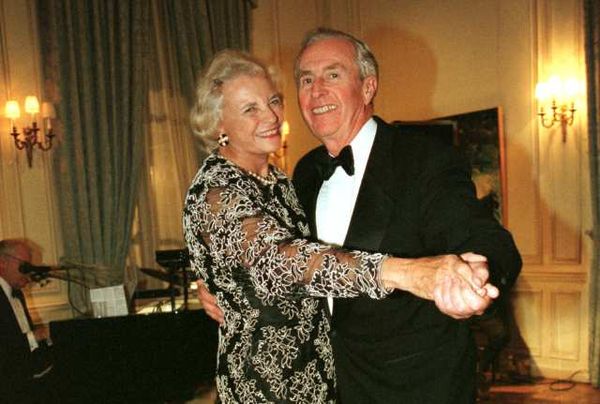
Pictured above: Sandra Day O'Connor and her late husband, John J. O'Connor, who died of AD in November 2009.

Friday, October 22, 2010

"Diabetes may affect as many as 1 in 3 Americans by 2050" Why this problem isn't being solved--and how to solve it.

An important article on the future of diabetes in USA Today this morning; reporter Mary Brophy Marcus cites data from the Centers for Disease Control showing that the incidence of diabetes in the US could double, or even triple, in the next 40 years.  Today, about 10 percent of Americans are being treated for the disease  and the cost to America is $174 billion, of which $116 billion is direct outlays. (Another four percent suffer from the disease, and aren't being treated, so if the untreated become the treated, costs will explode all the more.)   Now we might ask: What happens if the incidence of diabetes rises as predicted? The answer, of course, is that such a rise would be ruinous, medically and financially.

Some will say that the answer is to cut back on obesity, and that's fine--we should all avoid getting fat and we should all exercise more.  But as a practical matter, in a culture full of food, where most work is sedentary, it's hard to keep excess weight from accumulating--our bodies evolved for a much different, and hungrier, set of circumstances.   Indeed, lectures about proper diet can easily degenerate into hectoring, at which point, the teachable moment is lost.

In addition, of course, plenty of people develop diabetes for reasons not connected to weight--juvenile diabetes, or Type 1 diabetes--seems to have nothing to do with weight.   Type 1 is estimated to afflict three million Americans.

What's really needed is fresh thinking about a technical solution to the problems of diabetes, and, for that matter, obesity.   In the past, when we found that much of the population was contracting a certain malady, we looked for population-wide solutions, such as better sanitation, vitamins, vaccines, even fluoridating water.  (Imagine how the last 75 years of dental care would have played out if the great and the good had said in response to the plague of cavities, "Don't eat sweets!"  It might have seemed to be good advice, but it was impractical advice.  And impractical advice, by definition, is not good advice. Instead, we fluoridated the water and improved toothbrushes and toothpaste--technical solutions.)  

Indeed, across American history, technological solutions, from the McCormick Reaper to the Model T to the personal computer, are, frankly, the American Way.  So the technology for improving pubic health  should not be any different.   Maybe we need better medicine for diabetes--more on that in a bit.  Or maybe we need different approaches to obesity--not just consumer guides and and action against menus, but even more ambitious approaches, such as new kinds of appetite suppressants.   But either way, we need new thinking.

Yes, such research might be expensive, but of course, if we could develop effective and long-lasting techniques appetite suppressant, we would have the equivalent of a wonder drug.   Indeed, we have a product that Americans would want, and so would much of the world.  There's big money--not just for the government, but also for the private sector--to be found in solving such problems.  And jobs, too.

Unfortunately, at the same time, the research effort on diabetes is going in the opposite direction.  How so?  The trial lawyers are busy draining money out of the system.   For example, look what's happening to GlaxoSmithKline, maker of Avandia, the diabetes drug.   Hit with a blizzard of lawsuits, even though no proof exists that Avandia does any harm, analysts are now projecting that GSK could suffer a $6 billion hit in legal judgments.   And what about diet pills, as a proxy for diabetes?  Well, the fen-phen settlement took $3.75 billion from another Pharma company.   So much that line of weight-loss inquiry.

So let's ask: Who among us thinks that these legal judgments will increase GSK's eagerness, or the eagerness of any other company, to pursue new diabetes medications?    No hands up?  Nobody thinks lawsuits stimulate innovation?  I agree.

Thus we'll be left with a familiar treatments for diabetes, including dialysis (which can cost as much as $30,000 per year) amputation--and, well, it gets worse from there.

Does that sound like a good plan, either for the individual patient or for the nation as a whole?  Especially when the incidence of the disease, in the US alone, is expected to double or triple?    Once again, no one rises in the affirmative?  Very well. We all agree--non-treatment is a non-answer.

So what's needed is more and better medical treatment, to "bend the curve" not just on the cost of diabetes, but on the incidence and ravages of the disease itself.   And it would be nice if we had a better technology for weight control, too.  And yet progress is exactly what we are not going to get, as lawsuits chase out the drugmakers.

We will eventually have to confront a blunt reality: Every drug--any substance--has an adverse effect on someone, somewhere.   That's diversity for you.  So how does one make a drug that helps the patient, not hurts the patient?  The answer, of course, is "personalized medicine," which entails lots and lots of data-crunching.  Out of that data-crunching will come better answers as to who is in the "risk" category for a certain drug--and those people will be warned away from that drug.  (Or down the road somewhere, perhaps the chemistry of the drug could be tweaked so as to make it safe for whoever uses it.)

As we can see, such data-acquisition and utilization will be an enormous effort--an effort, truly, on a civilizational scale.   A data architecture that protects privacy, but also fosters research, innovation, and, most of all, better treatment.   And yet the only thing more enormous would be the upside, if we could make all this work. If we could we would all enjoy longer and better lives.

Sadly, the needed free flow of information is currently being crippled by privacy regulations, and even more cripplingly, by the trial lawyers.  As Jim Wootton of NationsCourt  points out, there is nothing that the John Edwardses of the world would like better than a huge national health database that would allow them to search for suits.  That is, simply keystroke "F2"--the command for a word search--and sit back while the computer combs through a hundred million files and plucks out the lawsuit-worthy key words.

It's that threat, Wootton argues that makes the complete and full realization of personalized medicine a chimera.  And also, he continues, the vision of fully usable electronic health records.  Both personalized medicine and EHR will always be more promise than reality until these liability issues are sorted out.  And by "sorted out," we really mean, "blocked."   As in, sorry, trial lawyers. Society has greater objectives than your enrichment.

Medical progress and lifesaving is too important to be left to trial lawyers.  That should be obvious, but so far, at least, it isn't.  And so we have an ever expanding supply of trial lawyers, and a stagnating supply of useful drugs.

That could change, but only if we make the change.  Meanwhile, if nothing is done and present trends continue, 1/3 of us will have diabetes in 40 years.  Is that really what Americans want?